Startup Bookkeeping 101: Payroll, Operating and Other Expenses

We have finally reached the end of the Profit and Loss. Operating Expenses include all of your expenses that do not directly support the production of your product or service. They include things like accounting, marketing, and payment processing fees that are necessary for the business to run but do not directly support revenue production. We discussed in the last post how Gross Margin is Revenue - Cost of Goods Sold (CoGS). Similarly, subtracting Operating Expenses from Gross Margin results in Net Operating Income. This is the net income produced from the operation of your business before considering any non-operating income or expenses and is the first indicator of whether or not the month was profitable.
Payroll
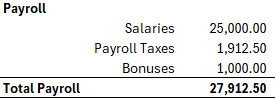
Non Cost of Goods Sold payroll expense is considered an operating expense but is typically reported in its own section. This allows reviewers to see at a glance the split between employee related expenses vs. general admin expenses. The image above shows a high level view you would typically see on a P&L Summary report. At the summary level all non-CoGS departments are reported together and the expenses are grouped into large categories such as Salaries, Commissions, Payroll Taxes, Bonuses, etc. Anything paid to employees as compensation should be reported in a Payroll expense account and included in the Payroll section of the P&L. Reimbursements and Per Diem amounts that are paid to employees but are not compensation related should not be included in this section and instead reported in the appropriate account based on what was reimbursed.
Each payroll expense should have a department attached which will allow for payroll reporting by department on the P&L Detail view. If you are not receiving this level of detail work with you bookkeeper until you are receiving the information you need to effectively manage your business.
Operating Expenses

Operating Expenses are fairly straightforward and include things like advertising, training, meals, office supplies, etc. Some expenses such as software subscriptions or travel will be coded to specific departments. Others such as rent that benefit multiple departments should be coded to a "department" called overhead or administrative. Coding expenses to an overhead department ensures all expenses are coded to a department and makes it easier to separate department specific expenses from general business expenses. Typically Operating Expenses are reviewed at the Summary level since the majority of these expenses will not be department specific but the detail view is useful to have in case questions come up.
Other Income/Expense

Other Income and Expense is a catchall category that includes all income and expenses that are not Revenue, CoGS, or Operating Expenses. Typically only a handful of accounts will fall in this category. Income should be included here if it is not related to the product or service you provide. Interest income from a savings account, the proceeds from selling a piece of equipment, etc. would fall under this category. Similarly Other Expenses include interest expense, depreciation, amortization, etc. These are all income and expenses incurred by the business but not generated or incurred by merely operating the business.
Net Income is reported after Other Income and Expenses are taken into account. This is your final amount that determines total profitability for a given time period. Net Operating Income excludes Other Income and Expenses and shows the profitability of the business based solely on operations. Typically Net Operating Income tells the better story and is more consistent while Net Income can be more volatile as the items included in Other Income and Expenses can be less consistent month to month.
Final Notes
Payroll, Operating Expenses, and Other Income and Expenses are vital to break out and review regularly. It is easy for these accounts to grow because they typically are not limited to a single department and what may be a small amount at the department level can easily add up. If you would like your P&L to provide you with the information you need to run your business please feel free to reach out via the contact page to learn how Woodham Bookkeeping can provide you with the quality of service you deserve.


Comments